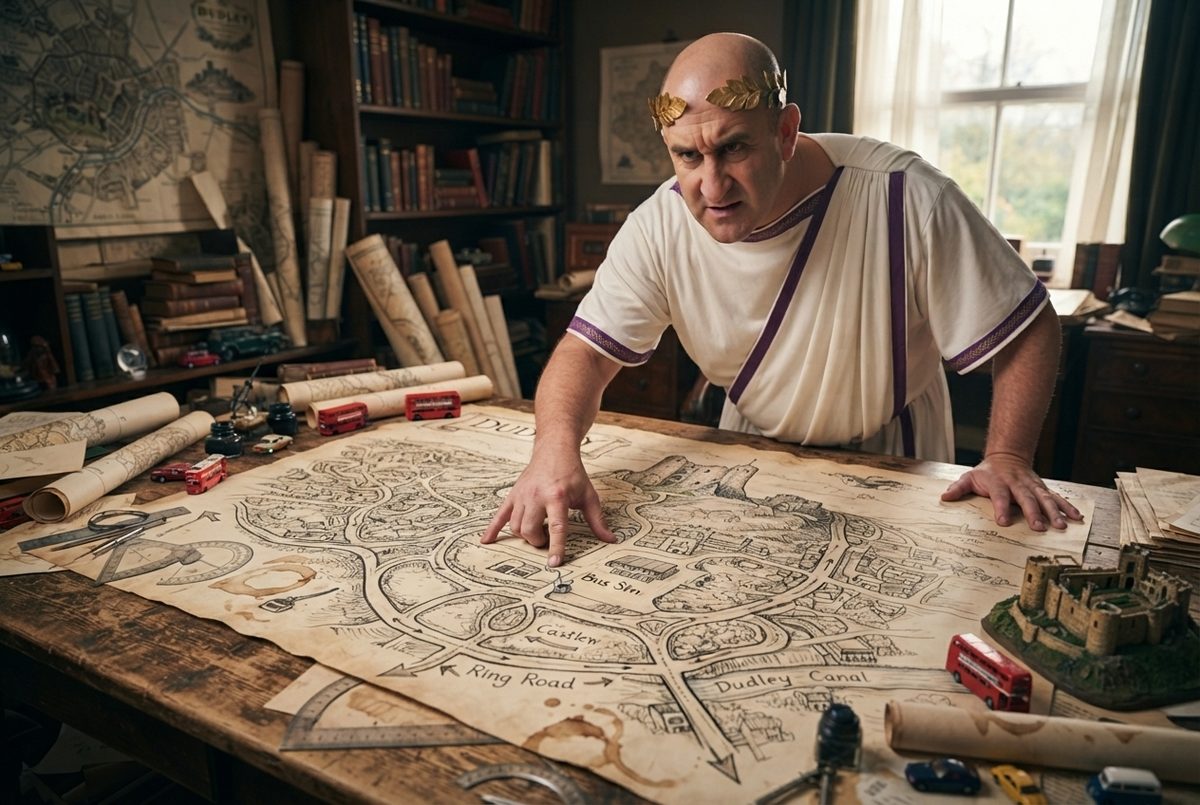
Dudley has its queue. So the plan is the whole town.
In the last post, Rome lost to Dudley. Good. You know where people want to go. The temptation now is to plan all of it: castle, bus station, ring road, a canal with a gift shop.
Eighteen months of drawings, and still not one visitor. Caesar is back, and he has a very large map.
Build one short road and four signposts.
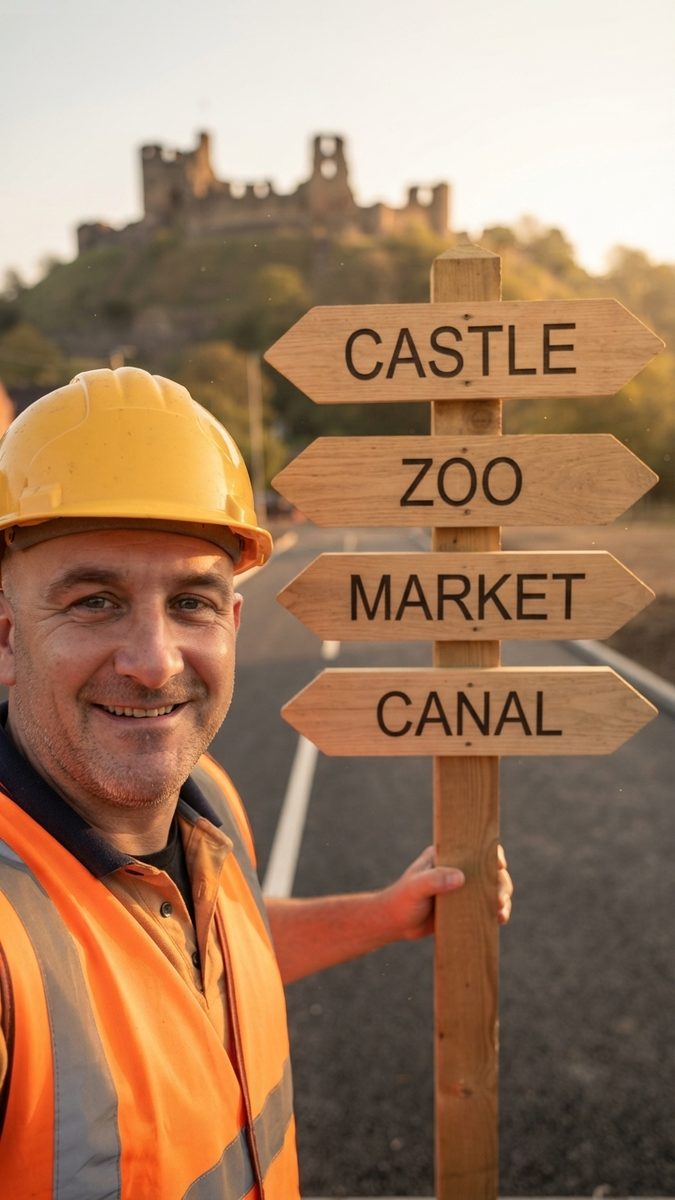
Castle. Zoo. Market. Canal. That's it.
The road is not the product. It's the cheapest way to watch where people walk. You aren't building the castle, the market and the canal. You're asking about them.
An unbuilt door says so.
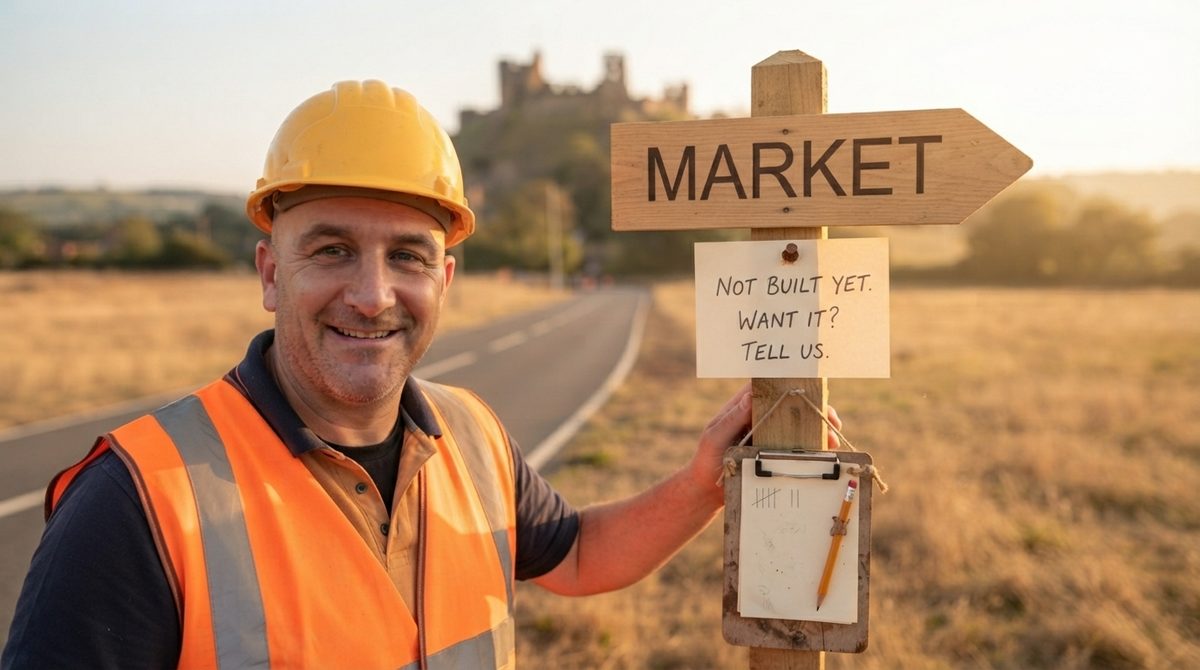
Every one of those four signs points at something that doesn't exist yet, so every sign says so: Not built yet. Want it? Tell us. Never a button that pretends to work.
People forgive an honest sign. They don't forgive a door that opens onto a wall.
"Zoo. Definitely the zoo."
Customer three, ignoring the castle
Then the crowd drifts one way.
Nobody queues for the castle. Nobody asks about the canal. Everyone walks past the market and heads for the zoo.
A click is a flicker of interest, and a useful one. Someone who puts a deposit down for zoo tickets is telling you something a lot louder.
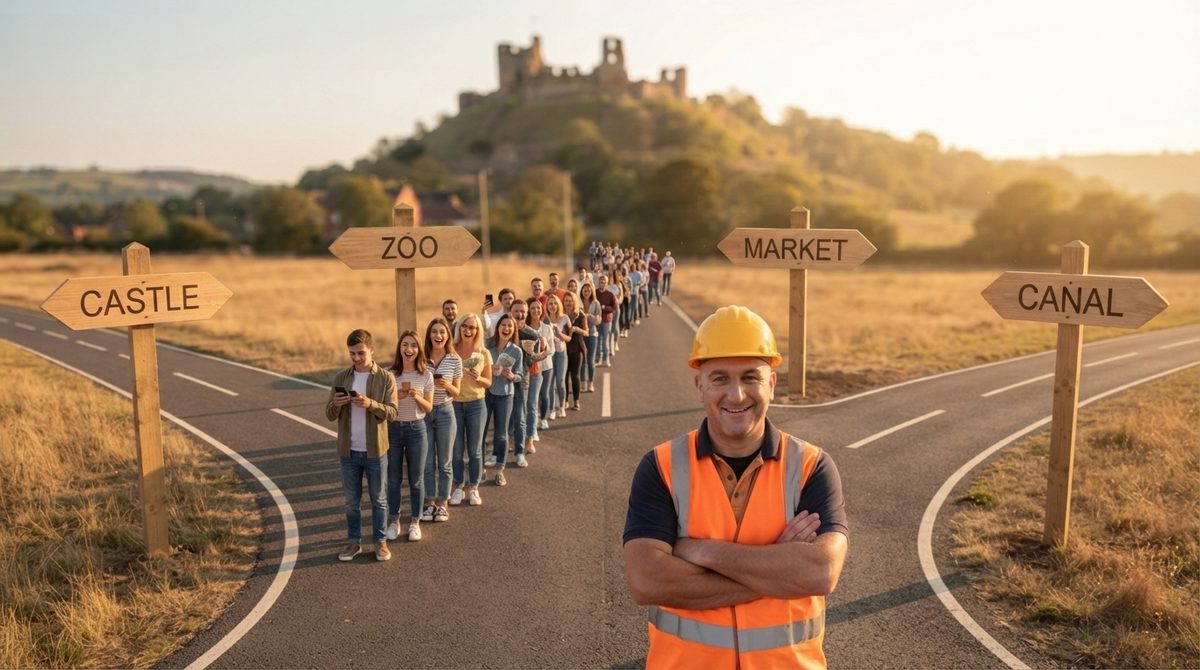
Build the zoo. Properly.
Real foundations. One enclosure that actually works. One real visitor, then another.
The road was the test. The zoo is the real code, the first layer of the product, and it's built to last. The rest of the town waits until people keep asking for it.
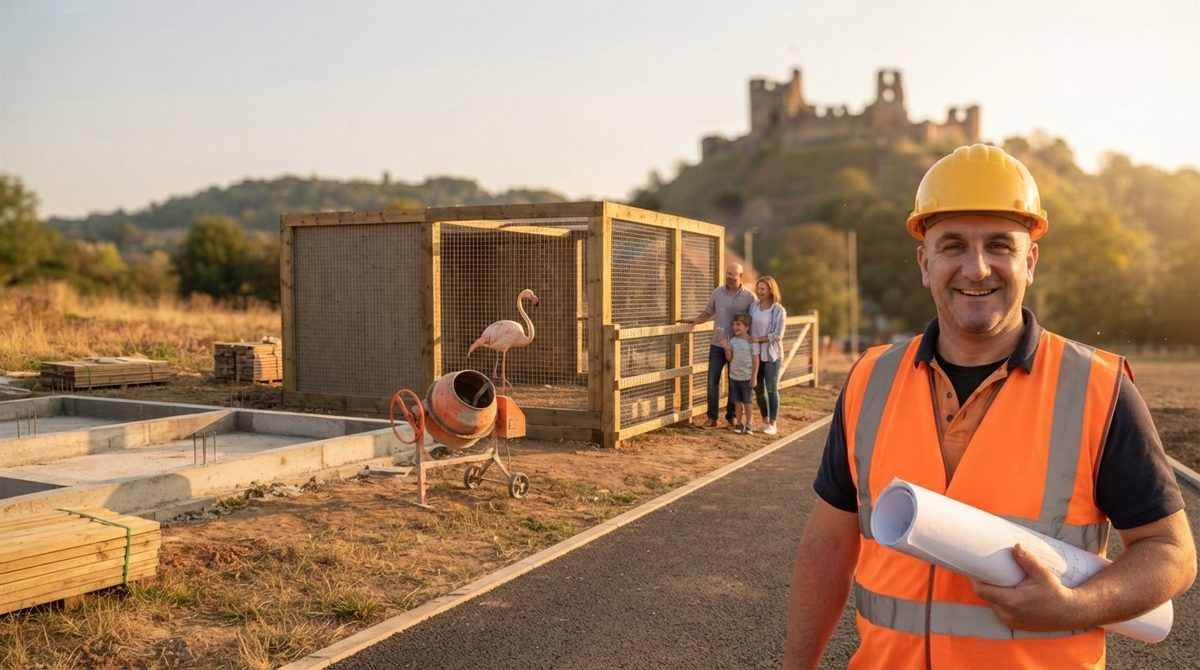
What the road actually is.
The road
The smallest possible way in. A landing page with a few clearly labelled options.
The signposts
The features people can choose between, each one honest about not existing yet.
The click
A flicker of interest. Useful, but weaker than a deposit, which is weaker than someone using the thing twice.
The drift
Where the crowd actually goes. Not always where you pointed.
The zoo
The one feature you build for real, to production standard.
The rest of the town
Waits until people keep asking.